Sln.6
Adapted to mid-to-high altitude Indian tropics, with good rust resistance and yields.
History & Origin
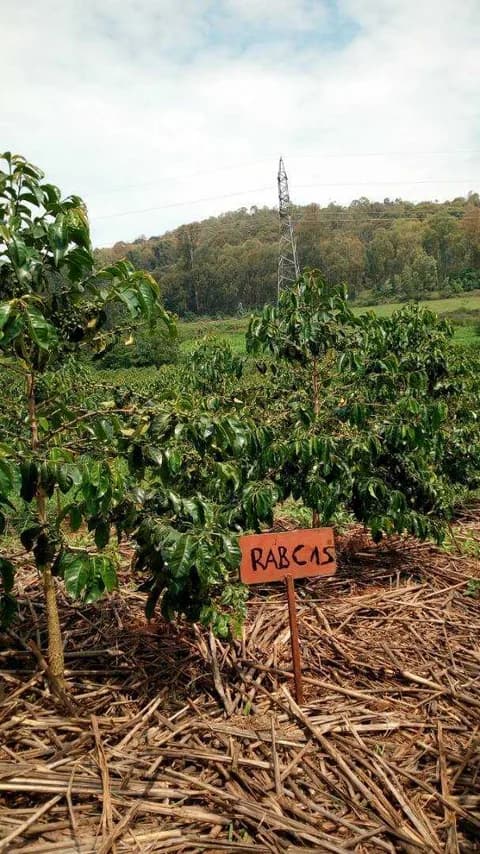
Sln.6 originated from an interspecific cross between the C. arabica variety Kent and the C. canephora clone S.274 and then backcrossed to Kent. Progenies from the second backcross were found to exhibit a uniform Arabica phenotype, but with the vigor of Robusta and a high level of field tolerance to rust. Backcrossing involves repeatedly crossing a hybrid offspring with one of its parent varieties-in this case, Arabica-to retain most of the parent’s characteristics while introducing specific traits from the other, such as disease resistance. As a result, Sln.6 is distinct from other catalogued varieties because it is the product of an interspecific cross between C. canephora (Robusta) and C. arabica, giving it unique vigor and rust tolerance not typically found in traditional Arabica lines. Sln.6 was created by Indian coffee breeders at Central Coffee Research Institute (CCRI) and distributed to Indian farmers in the 1970s, and which was shared with four African countries (Rwanda, Kenya, Zimbabwe and Uganda) in 2010. It was used by the Rwandan Agriculture Board to select and release the variety RAB C15.
Related varieties
Morphology
- Stature
- Tall
- Leaf tip color
- Light Bronze
- Bean size
- Large
- Yield potential
- Medium
Altitude & Quality
- Optimal altitude
- Medium
- Quality at high altitude
- Good
Disease Resistance
- Coffee leaf rust
- Highly resistant
- Nematode
- Susceptible
- Coffee berry disease
- Unknown
Agronomy
- Year of first production
- Year 4
- Nutrition requirement
- Medium
- Ripening
- Average
- Cherry to green outturn
- Average
- Planting density
- 3000-4000 plants/ha (using single-stem pruning)
Genetics
- Genetic group
- Introgressed (Other)
- Lineage
- C. canephora cv. S.274 x C. arabica cv. "Kent"
- Breeder
- Central Coffee Research Institute (CCRI)
מבוסס על World Coffee Research, Arabica Catalog · CC BY-SA 4.0