Honey (Pulped Natural)
דבש (Pulped Natural)A hybrid between washed and natural. The skin is removed but mucilage stays on the bean during drying, producing rich sweetness.
Typical flavor notes
Cup Profile
- Body
- Medium-full
- Acidity
- Balanced
- Sweetness
- Very high
- Complexity
- High
- Cleanliness
- Good
Process Details
- Duration
- 1-2 days to stable state
- Environment
- Mucilage retained on bean during drying
- Drying
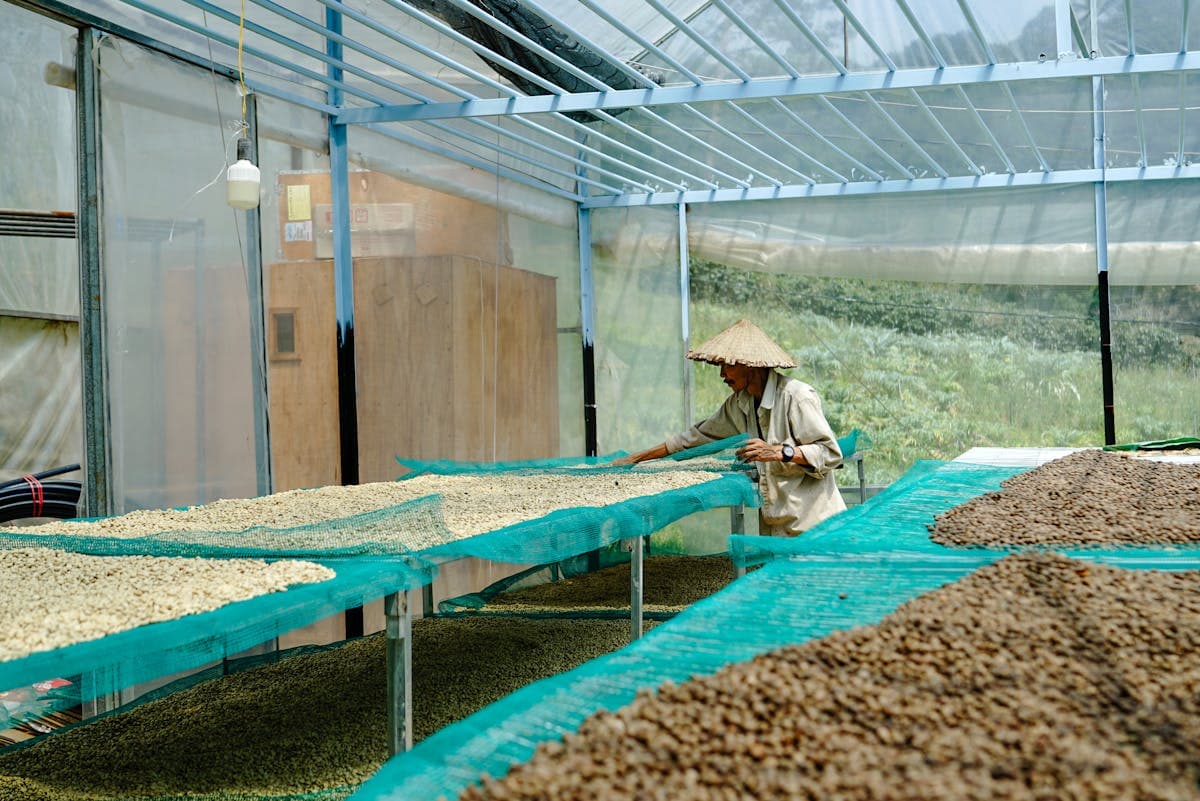
- Patio or raised beds
Common Origins
History & Process
The honey processing method emerged in Costa Rica during the first half of the 2000s, in response to water scarcity and a desire for a profile somewhere between the cleanliness of washed and the intensity of natural. The name 'Honey' has nothing to do with actual honey — it describes the sticky, sugary feel of the mucilage that stays on the bean during drying.
The process: cherries are harvested and depulped (like washed). But instead of moving to fermentation tanks — they go directly to drying with mucilage still attached. During drying its sugars penetrate the bean and shape the flavor.
The Honey method has split into several variations based on how much mucilage remains:
- White Honey: most mucilage removed before drying (~10% retained). Profile close to washed.
- Yellow Honey: ~25% mucilage, moderate sweetness.
- Red Honey: ~50% mucilage, rich sweetness.
- Black Honey: 100% mucilage, maximum sweetness, closest to natural.
The naming reflects the color the bean takes on during drying — more mucilage means a darker bean.
Advantages: high sweetness, fuller body than washed, cleaner than natural. Reduced water use. Downside: requires high skill and more attention during drying since mucilage is mold-prone.