Washed (Wet Process)
שטוףThe classic method of specialty coffee. Clean cups, defined acidity, and precise expression of variety and origin.
Typical flavor notes
Cup Profile
- Body
- Light-medium
- Acidity
- High and bright
- Sweetness
- Moderate
- Complexity
- Moderate
- Cleanliness
- Very high
Process Details
- Duration
- 12-72 hours fermentation
- Environment
- Water tanks
- Drying
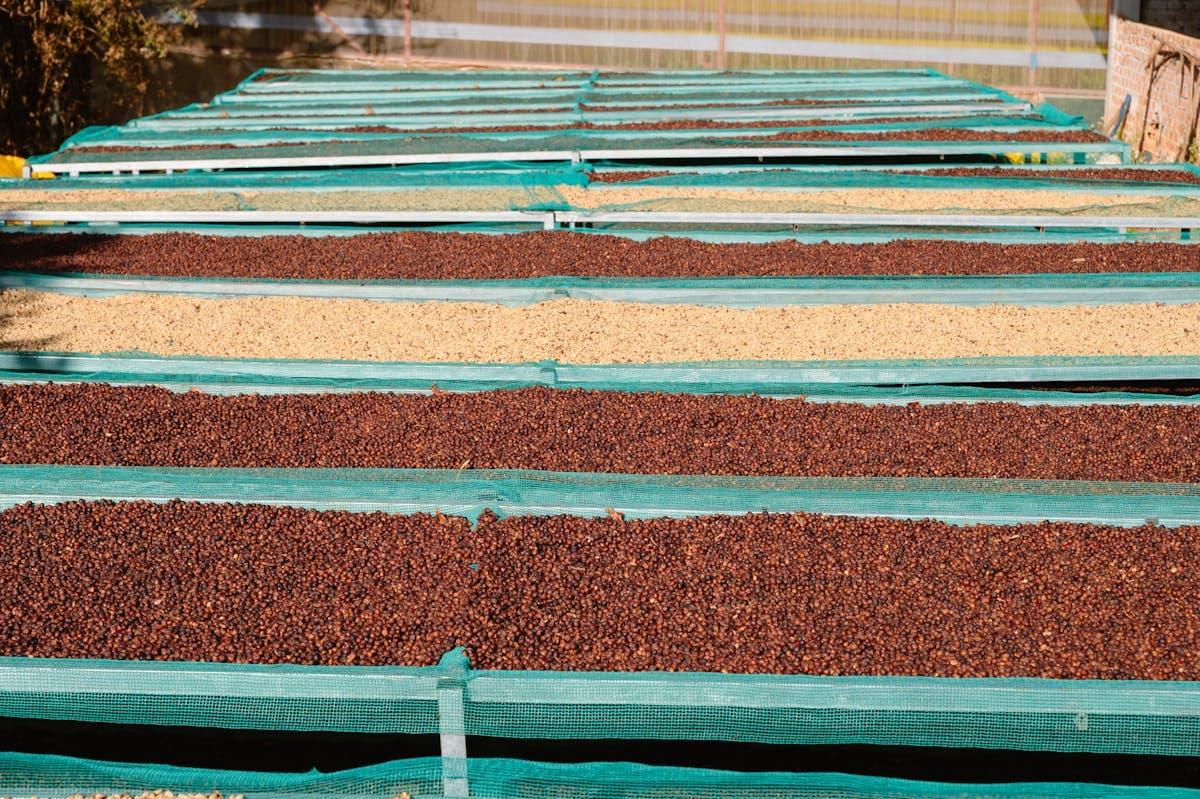
- Patio or raised beds, 7-14 days
Common Origins
History & Process
The washed (wet) process is the most common processing method in specialty coffee, and the oldest one done at scale. The flow goes like this: ripe cherries are harvested, brought to a processing station within hours, and depulped to remove the outer skin. The green bean — still wrapped in a sticky sugary mucilage — goes into water tanks where bacteria and yeast break the mucilage down over 12 to 72 hours, depending on climate and the producer's strategy.
At the end of fermentation the bean is washed in flowing water, still wrapped in parchment, and moves to drying on patios or raised beds until reaching a stable moisture content of 10-12%. Finally the parchment is removed and you have green coffee ready for shipment.
The advantage of washed processing: it nearly fully removes the influence of skin and fruit, leaving the variety's genetic character and the farm's terroir to speak for themselves. That's why it's considered the standard for high-quality coffee — particularly in regions like Kenya, Colombia, and Central America. Cups tend to be clean, acidic, well-defined, with moderate sweetness. The downside: it requires large amounts of water (~40 liters per kilo of green coffee) and standardized tanks, so infrastructure costs are high.